

What Is Local SEO?
Ever wonder how some businesses consistently top local search results, leaving their competition in the dust? The secret is Local SEO—a strategy focused on boosting a company’s visibility in organic, location-specific results on platforms like Google Search, Google Maps, and other search engines. By harnessing these tactics, you can help your Google Business Profile climb to a higher position in the local pack.
For instance, it can help your Google Business Profile rank higher in the local pack.
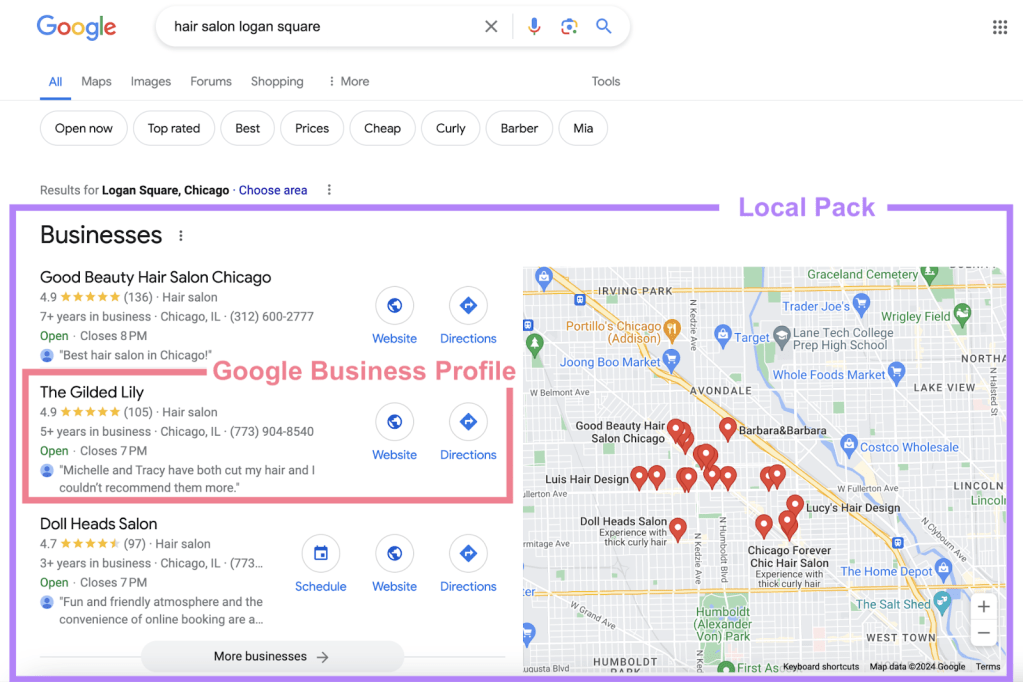
And the benefits don’t stop there: Local SEO can also help your website rank higher in standard organic search results—the familiar “blue links”—broadening your overall visibility and driving even more potential customers your way.

By zeroing in on these specific geographic areas, you can effectively stand out from the competition and connect with customers who are actively looking for services nearby. For businesses that rely on foot traffic or serve a localized market, this hyper-focused approach can mean the difference between barely showing up and truly dominating the local search landscape.
Note
Local SEO differs from regular SEO because Google uses some different systems and criteria to rank localized results.
Why Is Local SEO Important?
Local SEO makes your business show up in local search results, which brings in nearby customers and increases sales.
Google shows billions of local results every month. If your business appears near the top, more people will notice you and buy from you.
Google decides to show local results when it believes someone is looking for something nearby or in a specific place.
For example, local keywords could be:
- “mexican restaurants”
- “mexican restaurants near me”
- “mexican restaurants in dallas”
When you rank high for these keywords, more people can discover your business. This leads to more traffic and more sales.
No matter your business type or location, local SEO can help you reach more potential customers through search.
How Local SEO Works
Local SEO helps Google understand where your business is located and what it offers, which can lead to higher rankings when people search for related products or services. It can also improve how popular and trustworthy Google thinks your business is.
When ranking businesses in Google Maps or the local pack, Google looks at:
- Relevance: How closely your business matches the searcher’s needs
- Distance: How close your business is to the searcher’s likely location
- Prominence: How well-known and well-reviewed your business is
When ranking webpages in regular search results, Google considers:
- Relevance: How closely your webpage matches the searcher’s needs
- Quality: How helpful and trustworthy your content is
- Usability: How well your webpage works (e.g., speed and mobile-friendliness)
How to Do Local SEO
Create a plan to increase your local rankings and boost traffic by following these steps:
Tip Create your free Semrush account to follow along with the tutorials below.
Do Local Keyword Research
Keyword research for local SEO involves finding search terms people use when looking for local products and services.
Ranking for these keywords drives highly targeted local traffic to your site and can potentially bring more customers.
Start by compiling a short list of keywords people might use to find your local business. Then, use one or more of the methods below.
Research Your Competitors
Use Semrush’s Keyword Gap tool to see which keywords your competitors are ranking for. Simply enter your website’s domain and up to four competitors’ domains—the tool will provide keyword suggestions to help you. Pick your target country, then click “Compare.”

Scroll down to the keyword table and choose the “Untapped” option. You’ll see a list of keywords that at least one competitor ranks for, but you don’t—giving you valuable ideas to target in your SEO strategy.
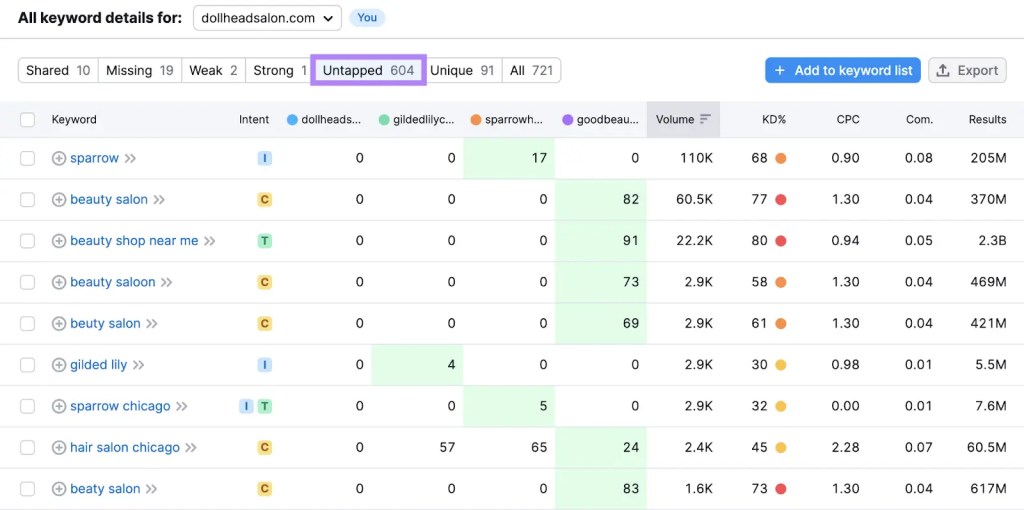
Select “Advanced filters” to remove any irrelevant keywords, such as those containing your competitors’ business names. This way, you can focus on the most valuable terms for your SEO strategy.

You can also filter based on:
- Volume: The keyword search volume—average monthly searches for the keyword
- KD%: The keyword difficulty score, indicating how hard it is to rank highly for the keyword
- Intent: The search’s general purpose (transactional, commercial, navigational, and/or informational)
Filtering with the above metrics and analyzing the results helps you identify the best keywords for your local SEO strategy.
Leverage Google Keyword Planner
Google’s Keyword Planner is designed for researching keywords for paid search campaigns but is also useful for discovering new business-related keywords for local SEO.
Go to the “Discover new keywords” section.

Click the “Start with a website” tab and enter a competitor’s domain
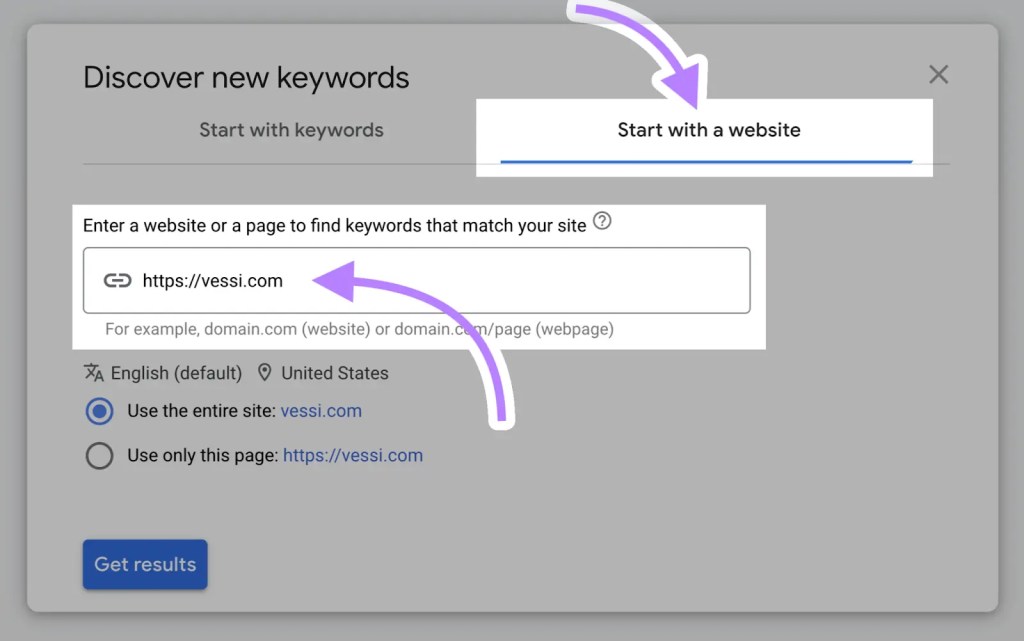
Click “Get results” to see keyword suggestions based on that website.
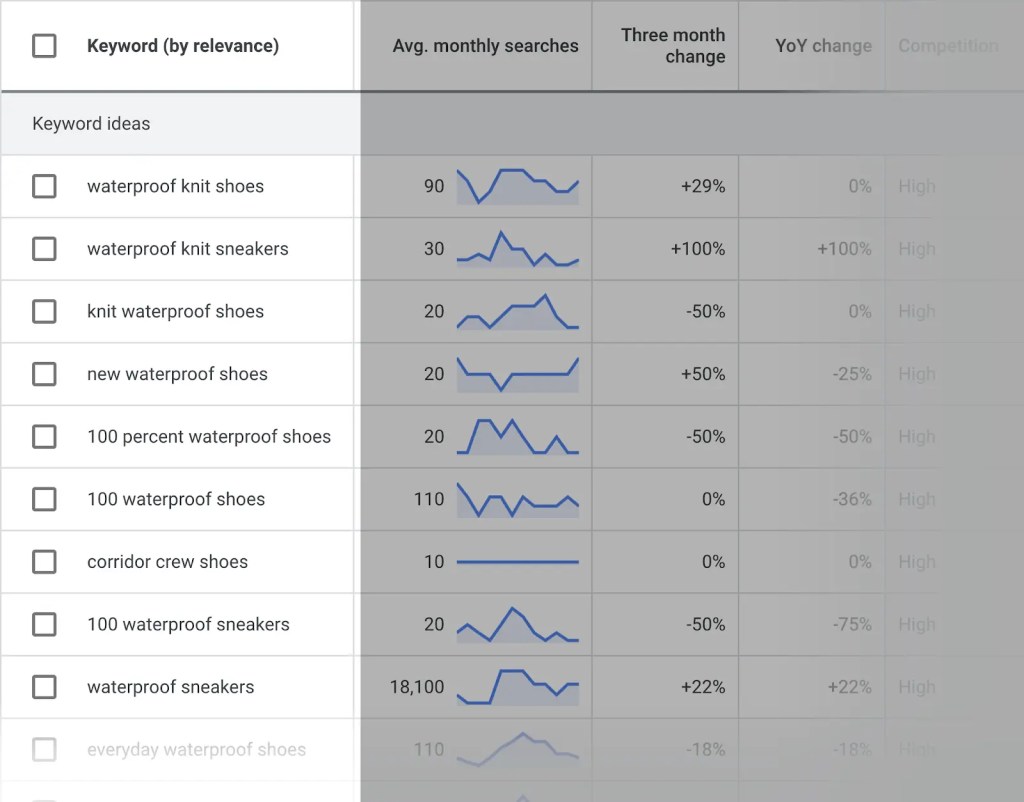
Repeat the process for your other competitors and add any relevant keywords to your list.
If you need more details about local search volumes, Google’s Keyword Planner offers data for specific cities or regions. Use this information to decide which keywords to target first.

Use Google Autocomplete
Google Autocomplete predicts search queries as you type, making it a great tool to find valuable long-tail keywords for local SEO—since these predictions partly depend on your location. For instance, if you type “best [product or service] in” while in a specific city, you might see suggestions like:
- best pizza in [city name]
- best dentist in [city name]
- best dog groomer in [city name]

These locations are near the searcher’s location.
To find valuable local keywords, start typing terms related to your business to uncover local keyword suggestions:
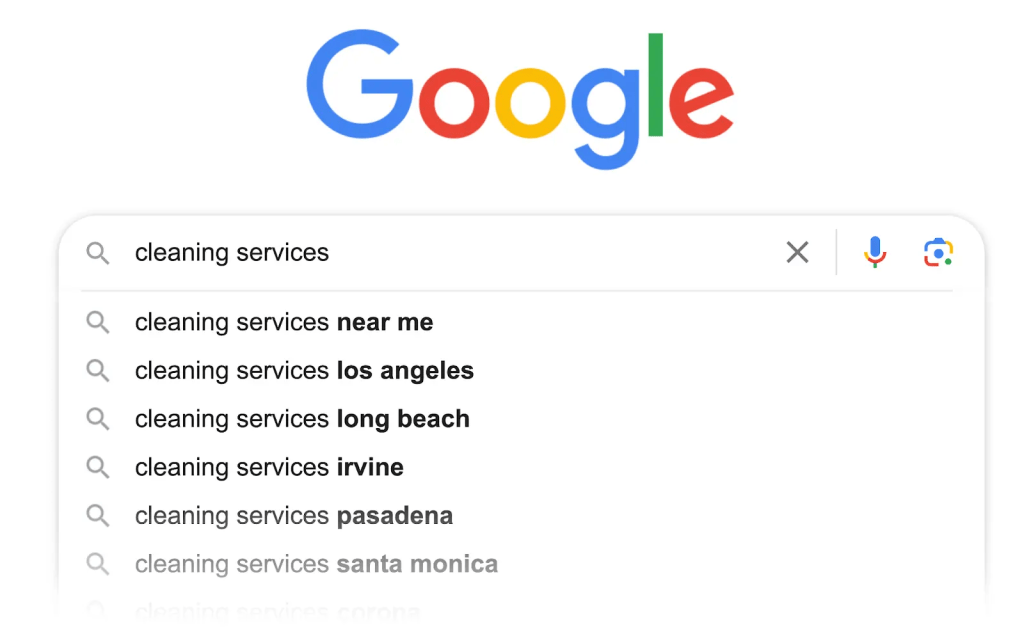
Adding local modifiers (like a specific city name) can uncover even more valuable keywords. For example, typing “[business type] in [city name]” might reveal a range of potential search terms you can target.

Experiment with different local keywords to build your list for local SEO.
Optimize Your Google Business Profile
Your Google Business Profile is a free listing that can appear in Google results, making it easier for local customers to find and connect with your business.

Optimizing your profile increases the likelihood of ranking highly when potential customers search for relevant terms, making them more likely to contact or visit you.
Add and/or verify your Business Profile to begin—and thoroughly complete the profile.
Provide details such as:
- Contact information
- Opening hours
- Photos and videos
- Business attributes (e.g., Wi-Fi availability, outdoor seating, etc.)
Keep Your Business Profile Active
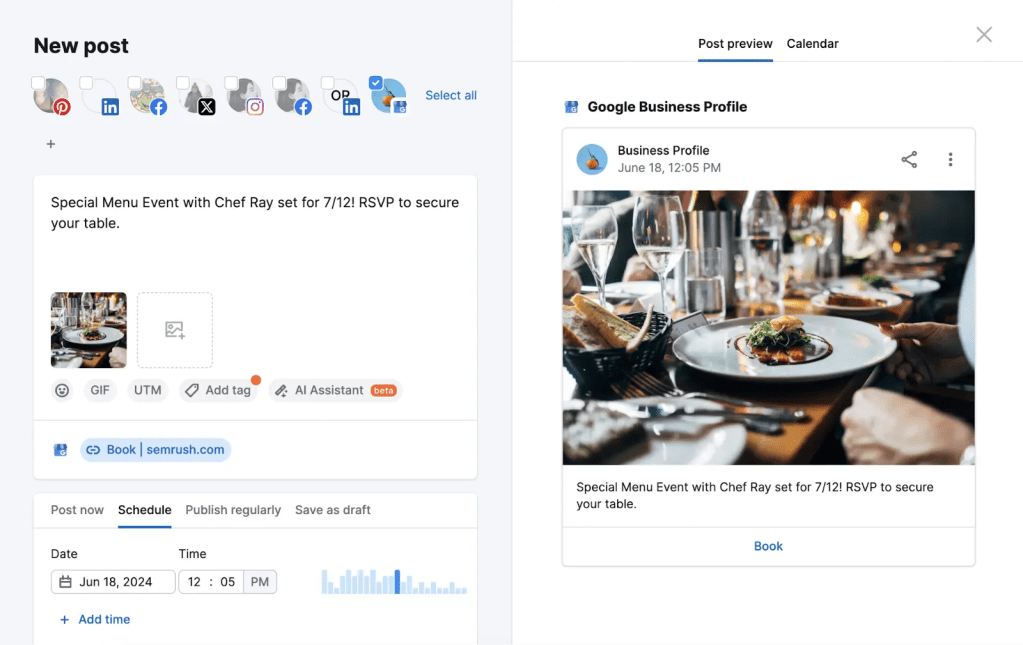
An active Google Business Profile shows both Google and potential customers that you’re an engaged business owner. This can improve your search rankings and bring in more customers. Be sure to keep your details current (for example, holiday hours or new addresses) to provide accurate, up-to-date information. You can also post updates about news, events, and offers. With Semrush Social, scheduling these posts becomes quick and easy.
Asking customers for Google reviews is another important part of maintaining an active profile.
More reviews and higher ratings can help your rankings and stand out to users.

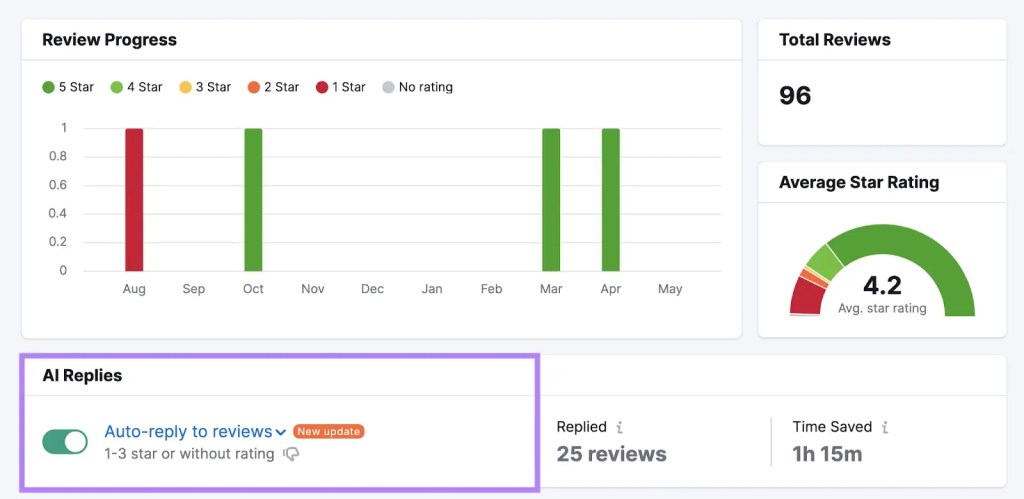
Respond to Google reviews as well. To show you value customer feedback and provide you with opportunities to address negative comments when necessary.
Semrush’s Review Management tool allows you to set up automatic, AI-generated replies.
Get and Monitor Local Citations
Get and Monitor Local Citations
Citations are online mentions of your business’s name, address, and phone number (NAP) that typically appear in business directories and on social media profiles.
NAP citations are important because Google may use them to verify that your business information is accurate and trustworthy.
For example:
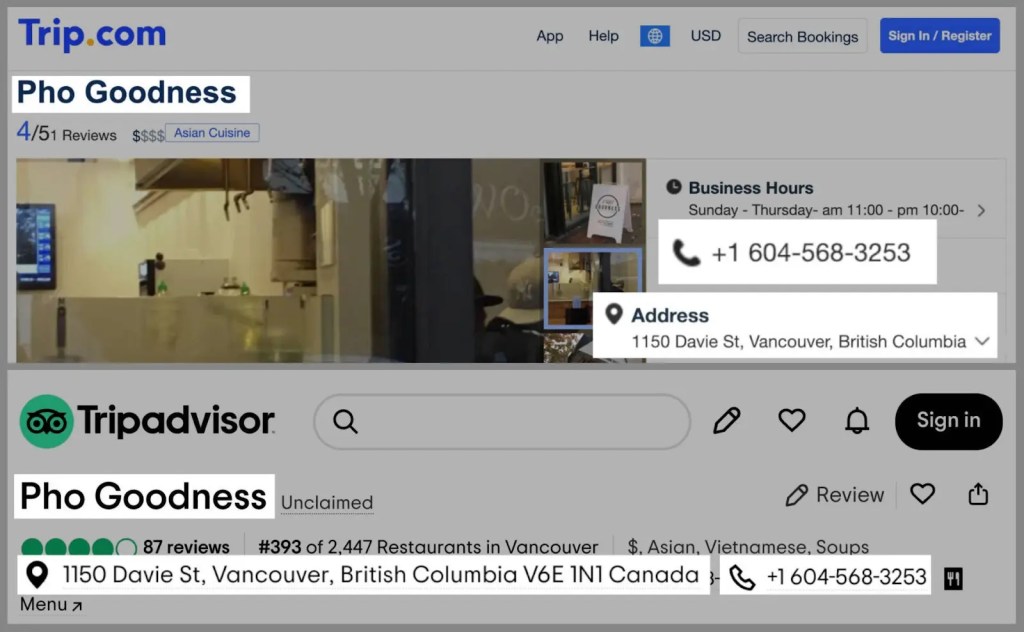
The more Google finds consistent NAP citations for your business, the more confident it becomes that your business is legitimate and reliable.
Therefore, aim to secure consistent citations on as many trusted websites as possible.
An easy way to check your local listings and distribute them to authoritative directories is by using Semrush’s Listing Management tool.
To start, enter your company name and select the correct address from the list provided.

You’ll see a report of your current online presence, including the total number of listings, listings to fix, and average star rating.
For example:

The tool also shows you a list of citations with errors—like wrong phone numbers or addresses. Just scroll down to see them.

You can download all this information using the “Export” button in the top right corner.

With a paid subscription, you can automatically distribute your business information to dozens of directories.
First, ensure your listing is up to date within the tool.
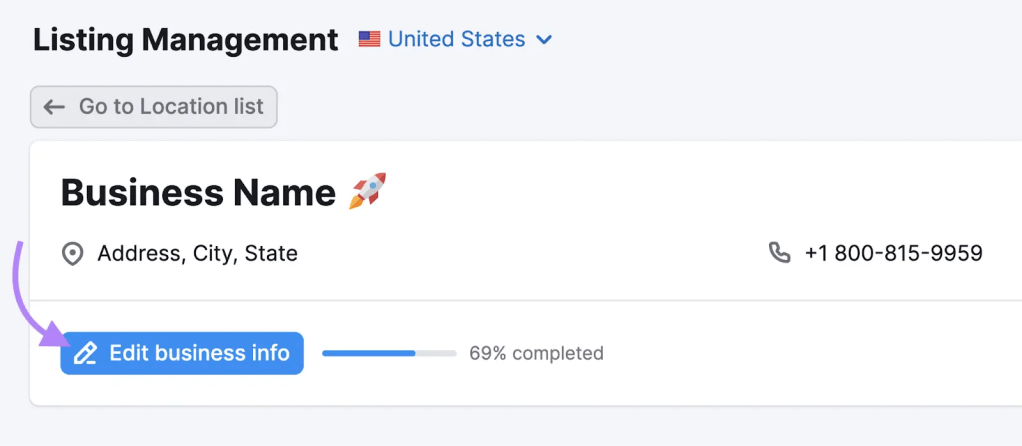
If you need to make changes, click the “Edit business info” button.
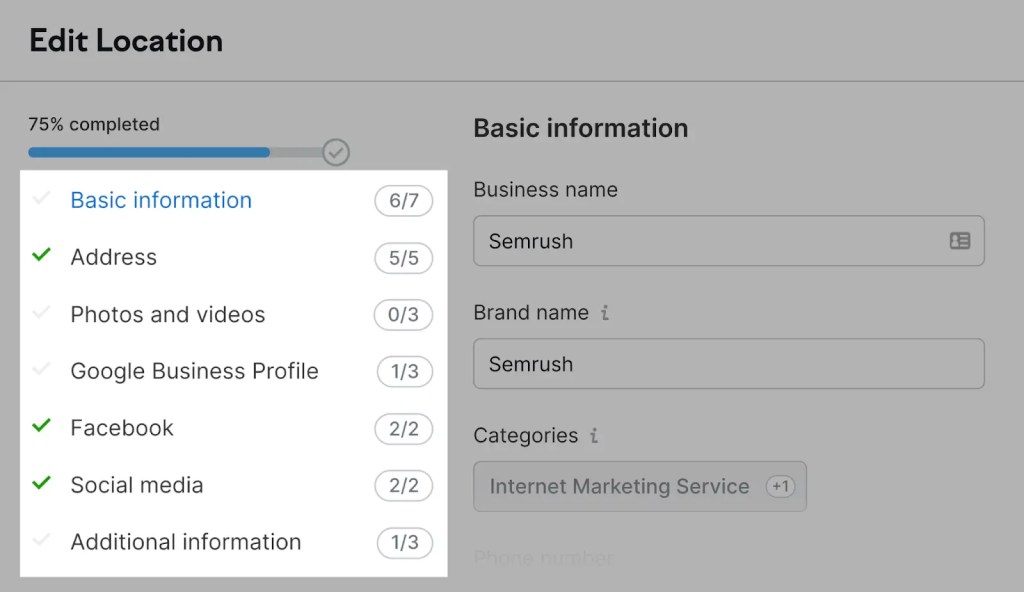
Remember to include extra details, such as photos, videos, a clear cover photo for your Google Business Profile, and your social media handles. This additional information can help your listing stand out and give customers a better sense of your business.
After connecting your business information, you’ll see a dashboard with four tabs:
- Listings: Shows all your listings and their current statuses
- Duplicates: Identifies duplicate listings and their types (e.g., suppressed, processing)
- User Suggestions: Lets you approve or reject customer-suggested changes
- Local Rankings: Displays how your business ranks in any city location
Make sure everything is fully updated and detailed. The tool will automatically maintain consistency for your business name, address, and phone number (NAP) across the web.
Here are some NAP citation tips:
- Keep every citation perfectly consistent (same name, address, phone number everywhere).
- Submit your information to popular directories in your local area and industry.
- Don’t forget major platforms like Apple Maps, Yelp, Bing Places, and Facebook.
Encourage and Respond to Online Reviews
Reviews act as social proof, demonstrate your expertise, and help potential customers feel more confident about choosing your business. Google reviews, in particular, are key, as they appear in search results and can improve your rankings. Collecting reviews on other platforms (like Tripadvisor) can also be beneficial.
Here are a few quick tips for managing online reviews:
- Ask happy customers to leave reviews on your preferred platforms
- Use posters or business cards with QR codes to guide people directly to your review page
- Add review widgets on your website for easy viewing and posting
- Never pay for reviews—this goes against the rules of Google and other platforms
- Track reviews across platforms with Semrush’s Review Management tool
Use Semrush’s Review Management tool to track reviews across platforms.

Using Review Management also gives you weekly email alerts about any negative reviews, so you can respond right away and address any concerns quickly.
Refine Your On-Page SEO
On-page SEO involves optimizing webpages to achieve better positions in organic search results, which is especially important for local SEO—strong organic performance improves your odds of appearing in the local pack.
You can quickly check your on-page SEO with Semrush’s On Page SEO Checker:
Click “Get ideas.”
Enter your website domain.

Follow the configuration guide to set up your project.
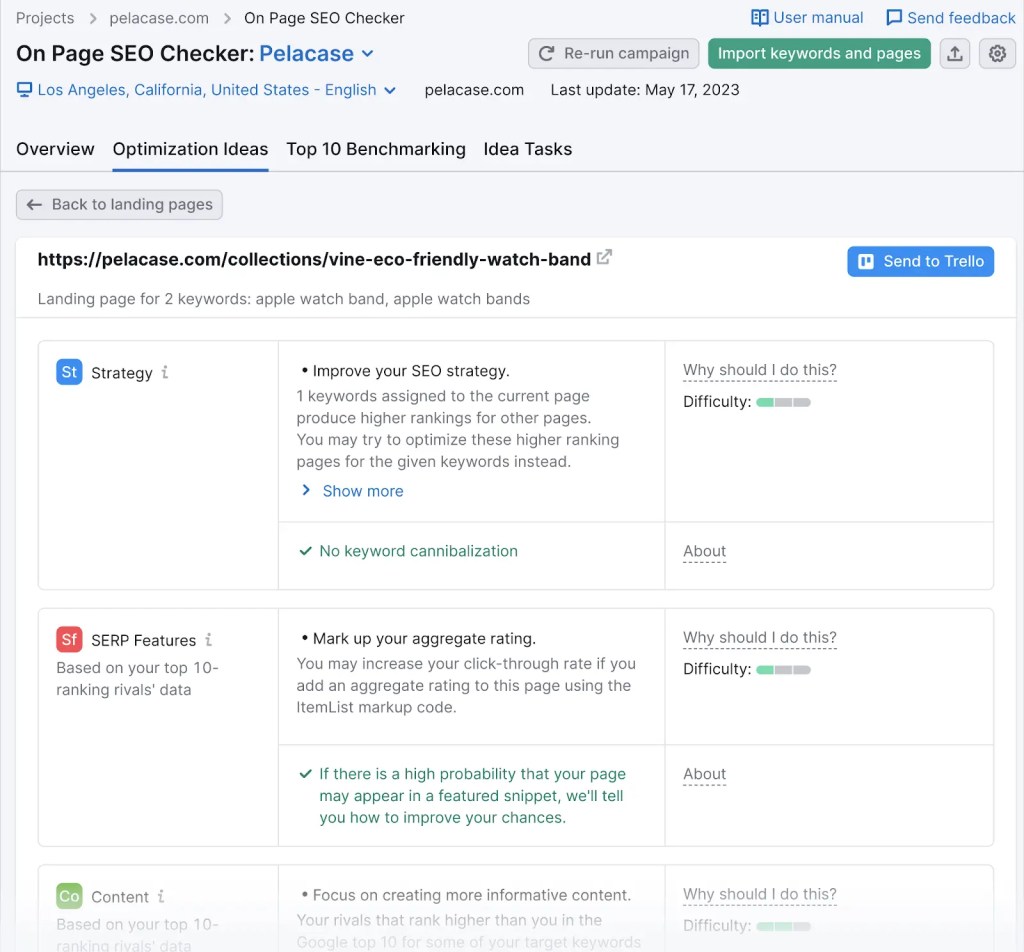
The tool will run an audit and display a dashboard with on-page elements you can optimize.

Scroll down to see pages sorted by “Priority.”

Optimize pages in this “TOP pages to optimize” section first for maximum impact.
Click the “# ideas” button next to each page for specific optimization suggestions.

Leave a comment